
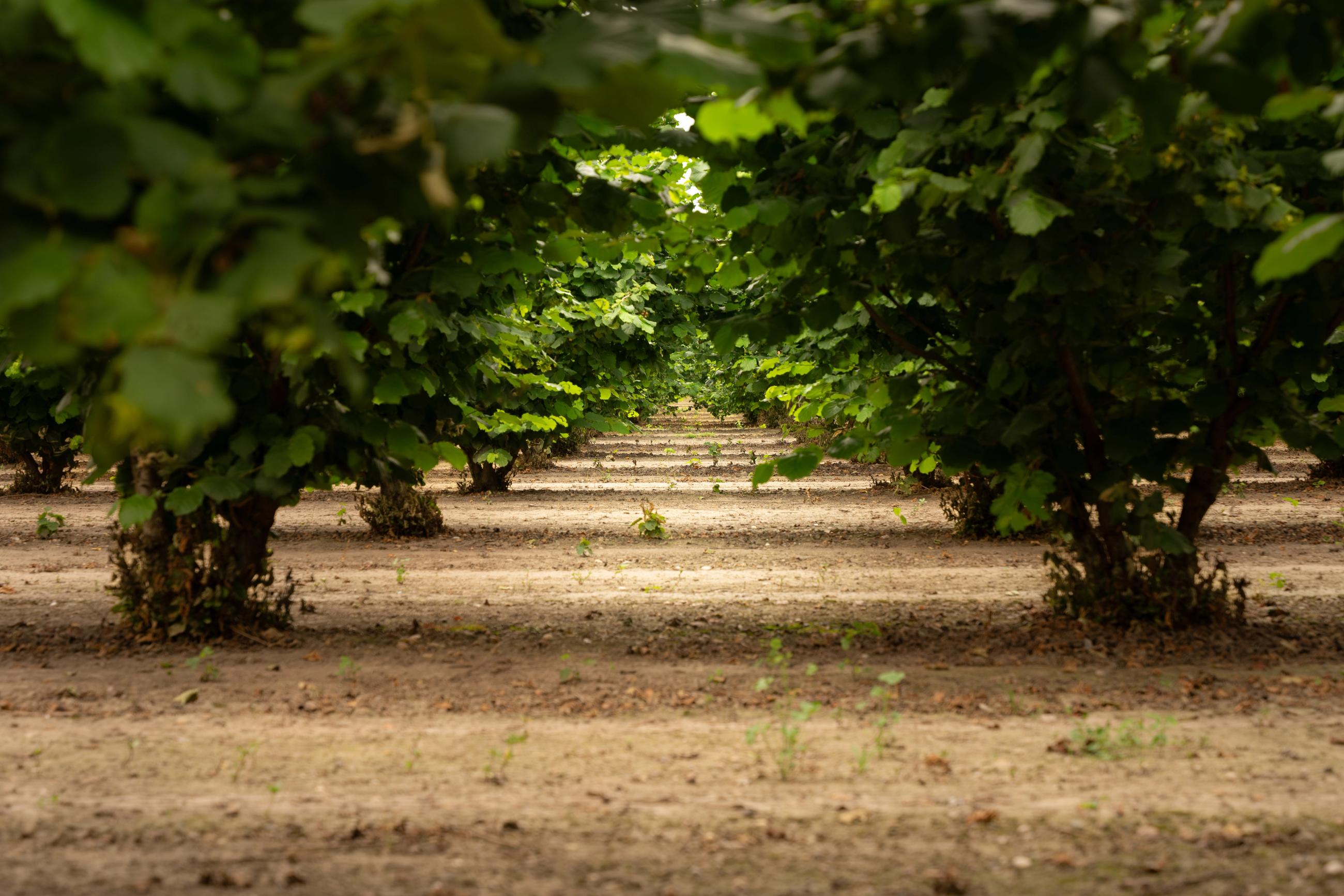
Carbon, soil, and biodiversity are measurable co-benefits of planting a permanent-crop orchard, and the research behind each is maturing at a different pace. The evidence for carbon sequestration in woody perennial systems is the most developed and the most consistent across studies and crops. The evidence that converting cropland to orchard improves soil organic carbon is well established in the broader literature, though rarely measured at any specific site. The market for biodiversity credits is the least mature of the three, both in standards and in scale. None of this is a reason to build a return case on any of them. It is a reason to understand what each is actually worth before anyone tries.
Why Carbon Co-Benefits Should Sit Outside Any Return Case
A co-benefit that has to work for an investment case to work is not a co-benefit. It is the case itself, underwritten on a market that usually cannot support that weight. Voluntary carbon credits illustrate the problem well. Natural climate solution credits generally trade in a range of $13 to $30 per metric ton, with select high integrity forestry and soil projects reaching $65 to $75. Estimates of where the broader market is headed disagree by an order of magnitude or more. MSCI Carbon Markets put the primary global voluntary carbon market at just over $1.4 billion in 2025, with an average credit price of $3.50 per metric ton, down from $4.30 in 2024, and projects it could reach $5 billion to $20 billion by 2030. Separate market research firms forecast a global voluntary carbon credit market anywhere from roughly $7 billion to $45 billion by the early 2030s, depending on methodology and which project types are included. A long range projection from BloombergNEF puts prices as high as $238 per metric ton by 2050. Every one of those numbers is a forecast, and the distance between them is the point. Pricing that range of disagreement into a return calculation would mean treating a genuinely unresolved question as settled. The safer approach, and the one this piece assumes throughout, is to value carbon at zero in any return case and treat whatever it contributes as upside on a case that already stands without it.
What Permanent-Crop Orchards Are Shown to Sequester
The most direct evidence on hazelnut orchards specifically comes from a 2020 study of Mediterranean groves under routine horticultural care, which measured total annual CO2 sequestration of 58.8 plus or minus 9.1 metric tons per hectare, with a seasonal peak around 12.4 metric tons per hectare in May (Granata, Bracco and Catoni, 2020). That is a measured figure from standing trees rather than a model, and it sets a useful benchmark for any per-hectare hazelnut sequestration estimate presented elsewhere. Other permanent crops support a similar order of magnitude through a different pathway. Research on almond orchards in California has focused on what happens to carbon when old trees are removed and recycled into the soil rather than burned, a practice known as whole orchard recycling. University of California studies have found this practice sequesters roughly 5 metric tons of carbon per hectare in the soil, with modeled estimates ranging from about 4 to 29 metric tons of CO2 depending on how much woody biomass is incorporated (Jahanzad et al., 2020, University of California, Davis, and the California Department of Food and Agriculture). The pathway is different, end of life biomass rather than standing canopy, but the broad conclusion is the same: woody perennial crops hold and add meaningfully more carbon than annual systems. Zoom out to agroforestry in general, rather than any one crop, and the comparable rate is much lower. Agroforestry systems broadly sequester an average of 1.22 metric tons of carbon per hectare per year, rising to 2.05 metric tons per hectare per year for silvopasture specifically, though that second figure rests on fewer data points (Villat and Nicholas, 2024). Converted to CO2 equivalent, that average is roughly 4.5 metric tons per hectare per year, an order of magnitude below the hazelnut and almond figures above. The gap is not a contradiction. Agroforestry as a category spans everything from dense woody perennial monocultures like a hazelnut orchard to sparse tree scattered pasture, and averaging across that range produces a number that describes none of its members well. Match the evidence to the specific system before using it, and do not let a favorable category average stand in for the number that actually applies to a given orchard.
What Happens to Soil When Cropland Becomes an Orchard
The peer reviewed literature on converting cropland to orchard is sparser than the literature on standing sequestration, and what exists is rarely about the crop or the region an investor actually cares about. A 2026 study converting farmland to orchard and agroforestry systems in an arid region of northwest China found topsoil organic carbon increased between 40.9 and 84.5 percent relative to monoculture, depending on the system and its age, with the largest gain, 84.5 percent, in a 15 year old intercropping system (Wang, Petticord, Zhao, Yang, Chen and Huang, 2026). That is a meaningful result about the direction and rough scale of soil carbon change under a conversion of this general type. It says nothing specific about any one orchard's climate, soil, or crop, and the underlying site in that study, at 65.4 millimeters of annual precipitation, is far more arid than most of the farmland being converted to orchards in Europe or the Balkans today. It is best read as an indication that the direction of travel is favorable and well documented in at least one setting, not as a number any particular orchard should expect to match.
What Biodiversity Credits Add, and How Firm That Claim Is
Biodiversity credits are the least firm of the three co-benefits, and that should be said plainly rather than rounded up. The global biodiversity credit market is young and growing quickly from a small base, estimated at $7.1 billion in 2025 and projected to reach $8.8 billion in 2026 and $38.0 billion by 2033, a compound annual growth rate of 23.3 percent, with North America currently holding the largest regional share (Grand View Research, June 2026). That is market sizing research about a nascent asset class. It is not evidence that any particular orchard, hazelnut or otherwise, can or will participate in it. Few permanent crop operators have committed their planting design, windbreak choices, or cover crop regime to a named biodiversity standard, and fewer still have had any of it certified. Where a co-benefit is real but unpriced, saying so plainly is more useful than implying a market that does not yet exist for most growers.
Four things separate a modeled co-benefit from an audited one, for any orchard. A published soil and carbon baseline taken at planting, followed by periodic re-measurement against it. A per-tree or per-hectare sequestration estimate that discloses the planting density and age it assumes, rather than a single lifetime average that obscures how the figure changes as trees mature. A completed certification under a named standard, with the certifier and methodology disclosed. And a first sale of credits into a named venue, at a disclosed price. Until all four exist for a given site, its carbon, soil, and biodiversity figures remain what the research above actually supports: real, plausible, and directionally backed by evidence from elsewhere, not yet backed by evidence from that site itself.
What This Does Not Establish
The sequestration figures in this piece come from a small number of studies, on a small number of crops and sites, and sector-wide conclusions drawn from them should be treated as directional rather than precise. The measurement methods differ between studies. Granata and colleagues measured standing orchard CO2 flux directly. Jahanzad and colleagues measured soil carbon from incorporated biomass after tree removal. Wang and colleagues measured topsoil organic carbon change after conversion. Figures from one method do not simply convert into another. The wide disagreement between voluntary carbon market size estimates, which currently range across an order of magnitude or more depending on methodology, is left unresolved here rather than closed by picking the estimate that reads best. That disagreement is itself evidence of an immature, thinly covered market. None of the research summarized here establishes what any specific orchard will sequester, store, or earn. It establishes what has been measured elsewhere, under different conditions, and what an investor should treat as directional evidence rather than a site-specific forecast.
References
- Granata, M.U., Bracco, F. and Catoni, R. (2020). Carbon dioxide sequestration capability of hazelnut orchards: daily and seasonal trends. Energy, Ecology and Environment, 5, 365 to 375.
- Villat, J. and Nicholas, K. (2024). Agroforestry carbon sequestration rates by system type. Frontiers in Sustainable Food Systems.
- Wang, W., Petticord, D.F., Zhao, S., Yang, G., Chen, Y. and Huang, X. (2026). Conversion from farmland to orchard or agroforestry improves soil carbon sequestration by enhancing microbial biological activity in Northwest China. PLOS One, 21(3), e0344008.
- Jahanzad, E., Marvinney, E., Holtz, B.A., Doll, D.A., Zuber, C.A., Culumber, M., Browne, G. and Gaudin, A. (2020). Orchard recycling improves climate change adaptation and mitigation potential of almond production systems. University of California, Davis, with the Almond Board of California.
- California Department of Food and Agriculture, Office of Environmental Farming and Innovation. Whole Orchard Recycling report, soil carbon sequestration modeling.
- Grand View Research (2026). Biodiversity Credit Market Size, Share and Growth Report, 2026 to 2033. Published June 2026.
- MSCI Carbon Markets (2026). Voluntary carbon market size and pricing data for 2025, cited via carboncredits.com.
- Fortune Business Insights, GM Insights, and Mordor Intelligence (2025 to 2026). Voluntary carbon credit market size forecasts, cited for the range of growth estimates to the early 2030s.
- Treesury approved whitepaper, sections 3.3.3, 5 and 6.2, for CO2 sequestration per tree, carbon credits per hectare at baseline and full maturity, and planting density and thinning timeline.
by Treesury Agri-Science Team